
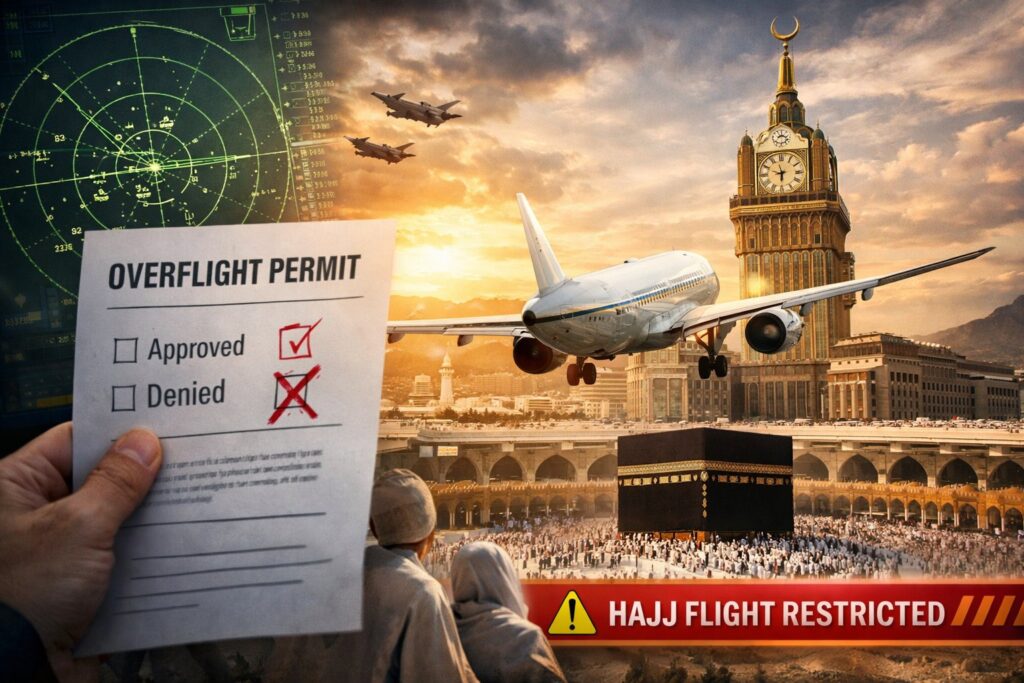
As the Hajj season approaches, aviation operators across Africa and Asia face increasing challenges related to Hajj overflight permits in 2026. As a result, increased pilgrimage traffic and strict Saudi airspace regulations cause delays and block approval processes.
Operators who rely on professional aviation flight support services significantly improve their chances of avoiding operational disruptions.
Why Hajj Overflight Permits Are Being Blocked in 2026
Saudi aviation authorities enforce strict airspace control during Hajj to ensure safety and prioritize pilgrimage flights. Therefore, overflight permits become more difficult to obtain during peak operations.
Key reasons include:
- High Hajj flight traffic volume, therefore priority goes to official pilgrimage operations
- Limited airspace capacity
- Strict Saudi regulatory screening
- Late or incomplete applications
- (International Civil Aviation Organization – ICAO)
Countries Affected in Africa and Asia
Africa:
Algeria, Chad, Egypt, Eritrea, Sudan, Libya, Nigeria, Senegal, Ethiopia, Kenya
Asia:
India, Pakistan, Bangladesh, Indonesia, Malaysia, Kazakhstan, Uzbekistan
Operators from these regions commonly experience:
- Permit delays
- Rejections
- Forced rerouting
Operational Impact of Hajj Overflight Restrictions
Hajj overflight restrictions significantly impact airline operations. As a result, airlines face:
- Flight delays and cancellations
- Increased fuel consumption due to rerouting
- Passenger dissatisfaction
- Crew duty time limitations
- Disruption of charter operations
- (International Air Transport Association – IATA)
Best Practices to Secure Hajj Overflight Permits
Operators should follow strict planning procedures to improve approval success rates.
- Apply 5–7 days in advance. However, for block or monthly permits, operators must apply at least 2 weeks prior to ensure approval.
- Submit complete documentation
- Work with experienced flight support providers
- Monitor Saudi NOTAM updates
- Prepare alternative routing options
Alternative Flight Routing Options
When permits are delayed or denied, airlines must adjust operations. For example:
- Northern route via Mediterranean airspace
- Southern route via Indian Ocean corridor
- Hybrid routing depending on aircraft range
FAQs About Hajj Overflight Permits
Why are permits restricted?
Due to congestion and prioritization of Hajj operations in Saudi airspace.
How early should applications be made?
Operators should apply at least 5–7 days before departure. In addition, block permits require earlier submission.
Can flights be rerouted?
Yes. However, rerouting increases cost and flight time.
Are charter flights affected more?
Yes, However because charter operations receive lower priority.
Is approval guaranteed?
No. Therefore, early application improves success rates for Hajj overflight permits.
Conclusion
Hajj overflight permit restrictions significantly impact aviation operations between Africa and Asia. Therefore, proper planning and professional flight support services are essential to avoid disruptions during the 2026 Hajj season